


Please stop and THINK before touching a baby bird
May 25, 2020
We are receiving a large number of reports from around the country that Wildlife Rescue sanctuaries are being swamped with unnecessary young birds being taken away from their parents and presented at their sanctuary gates when people have found them on the ground. As a direct consequence of this, many have now had to close to new admittances meaning the system is buckling under the weight and people having to travel up to two hours to reach an 'open' rescue. Use www.helpwildlife.co.uk to find your nearest rescue (insert your postcode in the 'location' box).
Please do remember that very few british birds fly straight away from leaving the nest, and many breeds spend up to 5 days walking and fluttering around on the floor before gradually taking to the skies.
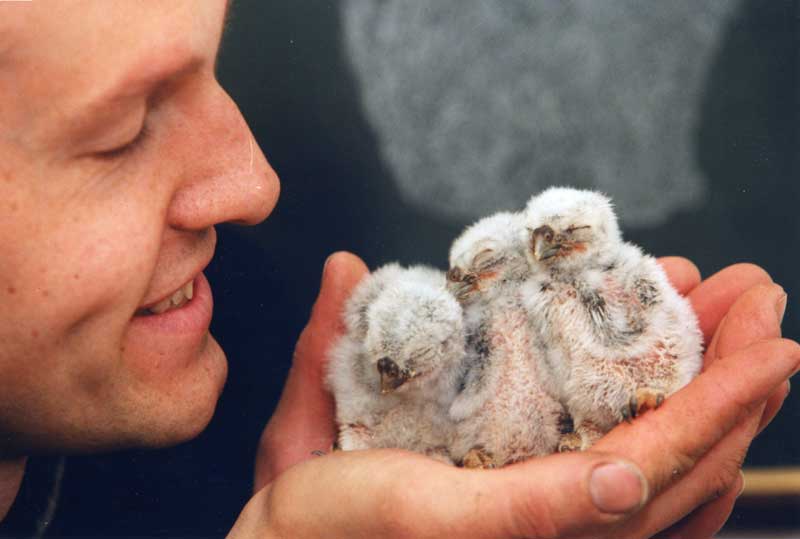
Some, such as tawny owlets will leave the nest a full 12 days before they can fly, and will still be mainly fluff with only a few wingtip feathers to show.
Generally however, if 'your' bird has all its body and wing feathers, and can walk or hop around (it will only have a short tail, as there's no room for a long one in the nest!), then it is the right age to be out on the floor. It will progress quickly onto the next stage of its development if left in the garden and allowed to be fed by its parents - which may only be every 2-3 hours, and not the 'every few minutes' as they were in the nest.
If your area is troubled by cats, use the citrus fruit method of cutting each fruit into 6-8 pieces and scattering them around the area you need to be cat-free.
If your cat has brought a bird into the house but it is uninjured and lively, you can give it a drink of sugared water or glucose, which will calm it down, rehydrate it, and give a boost of energy. It can then be re-released back into the garden and observed from a distance over the next 3-4 hours. Put the bird under a bush or hedge so it is sheltered whilst it gets its bearings again.
A large number of rescues use this website as a vital source of knowledge and guidance, so if you have read this advice in previous years - do bear with us. This website has received over 4.6 million visits in the past few years since its last upgrade, and has helped save many thousands of birds lives during that time.
Enjoy your bank holiday, keep safe and well.
Nigel
ADVICE
Wild Bird Advice and information
Many people would help birds more, if they knew simple easy ways in which they could help wild birds, without going to too-much extra trouble. Often there are ways to help – that don’t actually ‘cost’ anything at all, but can make a huge difference to making birds welcome and safe in the environment around us.
CITRUS FRUIT SAVES BIRDS LIVES
One of the main causes of bird injuries (espec

LATEST NEWS
-
Spring is here - a welcome sight!
Well, after Storm Dave overnight, I wasn't too sure what I would find at the Home Reserve today? After spending a good f
April 5, 2026 -
Can you help?
Our friends and colleagues at Knoxwood Wildlife Rescue currently have an appeal running to raise funds to restock their
March 28, 2026 -
Three Owls News 2026
Here we go with the next edition of Three Owls Newsletter. You can either click on this link to read the newsletter dire
March 22, 2026 -
A busy weekend!
It's been a busy week for these three tawny owlets. The severe storm last Friday evening saw them dislodged from the ne
March 21, 2026 -
Most requested information...
I often receive questionaires from schoolchildren doing projects; and am happy to help as you never know when a seed sow
March 8, 2026